Flooring Guides · Hardwood
European vs. American White Oak Flooring: Which Is Right for Your Los Angeles Home?
Both are white oak, both make excellent floors, and both are sold and installed across Los Angeles. They come from different species and different forests, though, and that shows up in color, grain, grading and how they are usually sold. Here is how they compare, and how to choose for your home.
By Los Angeles Hardwoods ·

Short answer. Neither is better in every home.
European white oak suits you if you want an even, warm, pale floor, wide and long planks, an oil or fumed finish, or classic herringbone.
American white oak suits you if you want a little more hardness, more natural character, or rift and quarter sawn boards.
In most Los Angeles homes the bigger decisions are engineered or solid, plank width, grade and finish. Compare real boards in your own light before you decide.
Side-by-side comparison
| European white oak | American white oak | |
|---|---|---|
| Species | Mainly Quercus robur and Quercus petraea | Mainly Quercus alba and related white oaks |
| Typical tone | Warm beige to honey, fairly even | Tan to light brown, more board-to-board variation, sometimes olive or gray hints |
| Grain | Often milder and more uniform | Often bolder, with more pronounced figure |
| Janka hardness (approx.) | About 1,100 to 1,200 lbf, varies by origin | About 1,360 lbf |
| How it is usually sold | Mostly engineered, often wide and long planks, many prefinished | Solid and engineered, strip to wide plank, prefinished or unfinished |
| Grade names | Set by each mill: Prime, Select, Natural, Rustic, or letter grades like AB and ABC | North American grades such as Clear, Select, #1 Common and #2 Common |
| Stands out for | Pale natural looks, oil finishes, fuming, herringbone and chevron | Hardness, visible character, rift and quarter sawn faces |
Color and grain
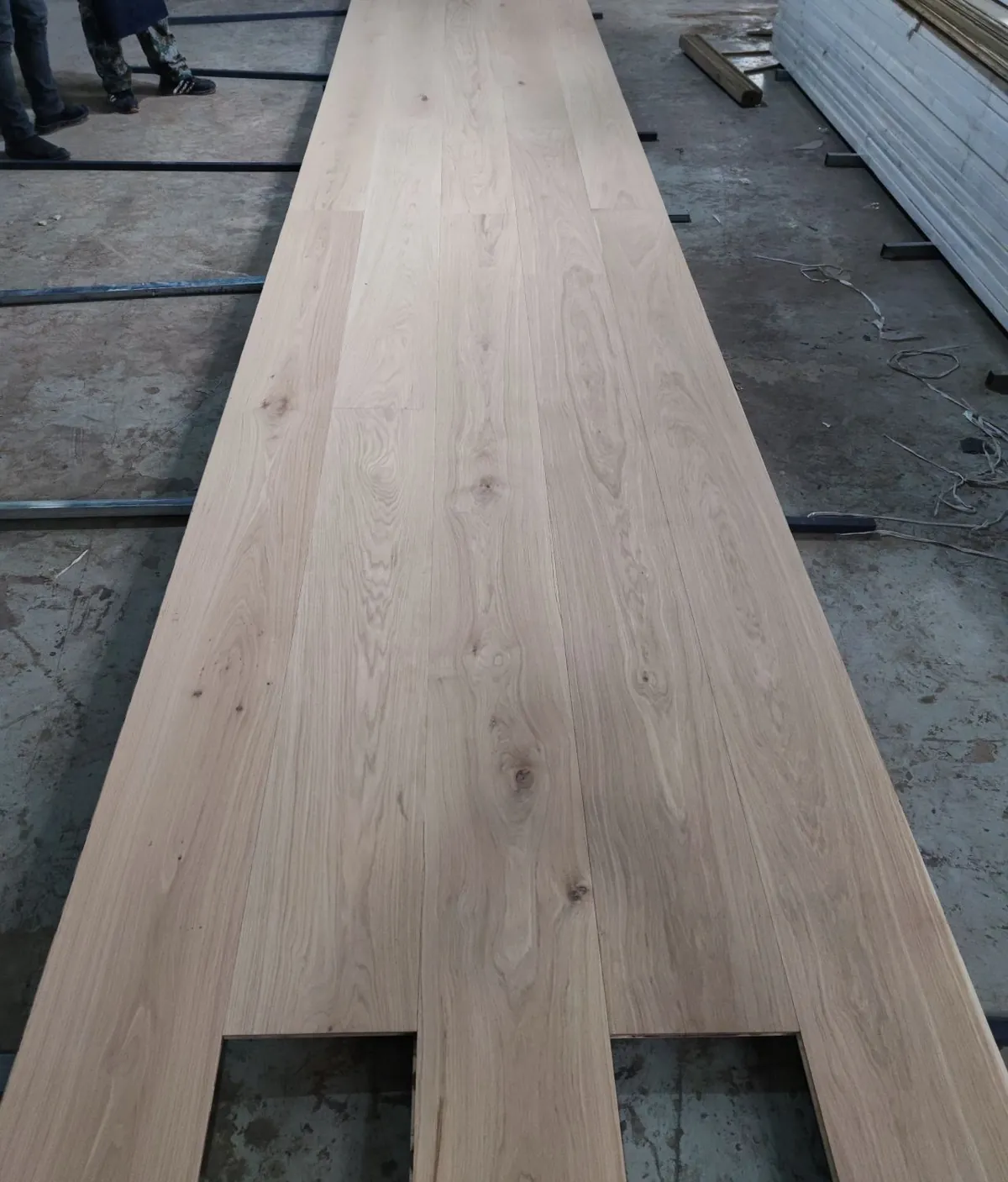
European oak is often grown slowly in managed forests, which tends to give tighter, more even grain. Its natural color is a soft warm beige, and the change from one board to the next is modest. That evenness is a big reason it is the default for the light, natural, matte floors so many Los Angeles remodels ask for.
American white oak has more going on. In a single carton you can see tan, light brown and the occasional olive or gray streak. Under a clear finish it reads livelier than European oak; under a stain that variation can add depth. Both oaks show ray fleck, the shimmering flake in quarter sawn boards. American quarter sawn oak often shows it more boldly.
Hardness and durability
American white oak is the harder of the two. Published Janka values put it at about 1,360 lbf, and European oak at roughly 1,100 to 1,200 lbf depending on where it grew. In practice both hold up well in busy homes. Dents and scratches are driven more by the finish, the sheen, how thick the top layer is on an engineered board, and pets, grit and furniture. A matte or wire-brushed finish hides everyday wear better than a glossy one on either oak.
How each one is graded
This is where most comparisons go wrong. American oak flooring is commonly graded with North American names such as Clear, Select, #1 Common and #2 Common. European mills use their own grade names, such as Prime, Select, Natural and Rustic, or letter grades like AB and ABC, and each mill defines them a little differently.
A European "Natural" is not the same as an American "#1 Common," even if they sound alike. The reliable way to compare is with real boards that show the full range of the grade, including the knots and color variation you will actually get, not one hand-picked sample.

Finishes and color
Both oaks are rich in tannin, so both respond to fuming, reactive stains and lye or white treatments. European oak is the classic base for hardwax oils and pale, "raw" looks because its even tone makes the result predictable across a large room. American white oak takes stains and oils well and suits designs that want visible character.
Because finish color depends on the wood underneath, approve color on boards from the actual product, not a printed chip. With prefinished flooring the color is set at the factory. With unfinished flooring it is sanded and finished on site, which gives more control but adds time to the job.

Slabs, raised floors and Los Angeles weather
For stability, construction and cut matter more than species. An engineered board of either oak is far more stable than a solid one, which is why engineered is the usual choice on the concrete slabs common in the Valley and in condos. Rift and quarter sawn boards also move less across their width than plain sawn boards.
Los Angeles adds dry spells. Santa Ana winds can drop indoor humidity sharply, which can open small gaps between boards for a while. The flooring and subfloor should be checked for moisture before installation, acclimated as the manufacturer requires, and installed with the home at its normal living conditions. Slabs also need a moisture test before any wood goes down. See our guide to engineered hardwood over concrete and how we handle subfloor preparation.
Wide planks, herringbone and stairs
Wide planks. European oak is widely available in engineered planks of 7½ to 9½ inches and long lengths, which is why it dominates wide-plank remodels. American white oak is also made in wide engineered planks; wide solid boards need extra care with moisture.
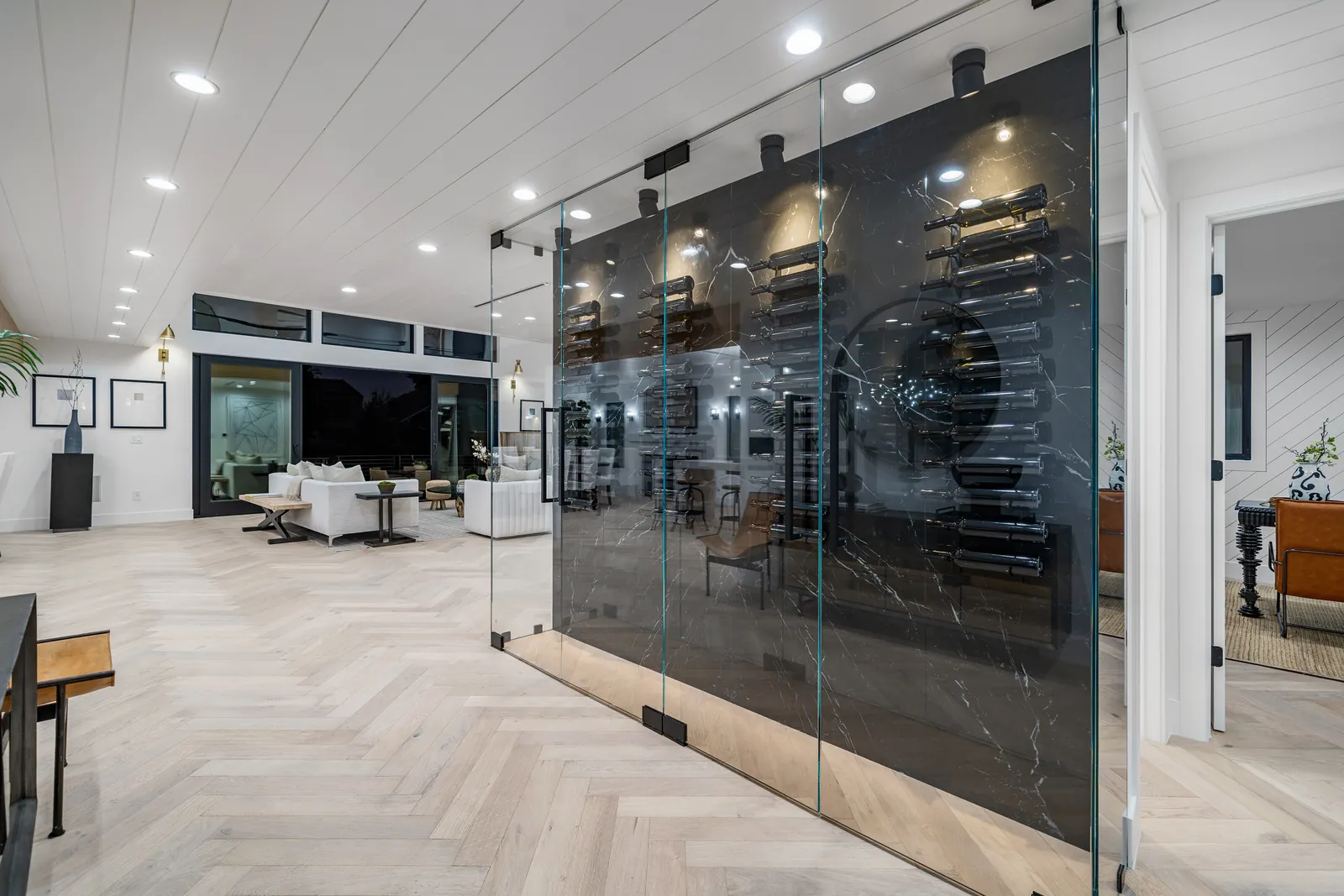
Herringbone and chevron. European oak is the traditional choice and easy to source as engineered pattern stock. Our Westlake Village project used herringbone European oak downstairs and wide plank upstairs. See herringbone and chevron floors.
Stairs. Whichever oak you choose, treads and nosings should match the floor. Matching nosings are available for many, but not all, floors, so confirm before you order. More on custom stair treads.

Which should you choose?
- Choose European white oak for an even, warm, pale floor, wide and long engineered planks, an oil or fumed finish, or French-style herringbone and chevron.
- Choose American white oak for a little more hardness, more natural character, bold quarter sawn flake, or rift and quartered boards, including site-finished floors.
- On a concrete slab, choose engineered in either species and plan for moisture testing.
- Not sure? Look at both, in full boards, in the room where they will go.
What we carry
Our catalog includes wide-plank European and French oak from several brands, listed on our European white oak flooring page. For American white oak, Garrison's Contractor's Choice Premium American White Oak comes unfinished in 3¼-inch, 5-inch and 7-inch widths. Browse all hardwood flooring. Pricing is by quote: call (323) 498-3735.
We sell and install. We bring samples of both oaks to your home, check the subfloor and moisture, and give you a written estimate for materials and installation, or materials only. See hardwood floor installation in Los Angeles.
Common questions
What is the difference between European and American white oak?+
They are different species. European oak is mainly Quercus robur and Quercus petraea; American white oak is mainly Quercus alba and related North American white oaks. European oak usually reads warmer and more even in tone. American white oak is a little harder and tends to show more color variation from board to board.
Which white oak is harder?+
American white oak. Published Janka hardness is about 1,360 lbf for American white oak and roughly 1,100 to 1,200 lbf for European oak, depending on where it grew. For a floor, the finish, wear layer and how the home is used matter more than that gap.
Is French oak the same as European oak?+
Yes. French oak is European oak grown in France. Some brands list it separately; our product pages show the species exactly as each manufacturer names it.
Is European white oak more expensive?+
It often is in wide, long, clean grades, but the ranges overlap. Plank width and length, grade, wear-layer thickness and finish usually move the price more than the species. We quote both for the same rooms so you can compare.
Can I use European and American oak in the same house?+
Yes, in separate areas divided by a threshold or a change of room. Side by side in one open space the difference in tone usually shows, so most homes use one oak throughout the main level.
Which oak is better for herringbone?+
Both work. European oak is the traditional choice for French-style herringbone and chevron and is widely available as engineered pattern stock. American white oak gives a little more hardness and more natural variation in the pattern.