Projects · Stairs
Custom White Oak Stair Treads Stained to Match Hardwood Flooring
A staircase should feel connected to the flooring around it. For this project, Los Angeles Hardwoods fabricated and installed custom white oak stair treads, starting with unfinished wood and staining the treads to coordinate with the flooring color. Here’s a closer look at the project and what homeowners should consider when planning hardwood stairs.
By Los Angeles Hardwoods ·

- Scope
- Custom stair treads, fabricated and installed by Los Angeles Hardwoods
- Material
- White oak, started unfinished
- Finish
- Stained to coordinate with the flooring color
- Photos
- Taken during installation, before the work was complete
The project: custom white oak treads
We fabricated and installed custom white oak stair treads for this staircase. The treads started as unfinished white oak and were stained to coordinate with the color of the flooring.
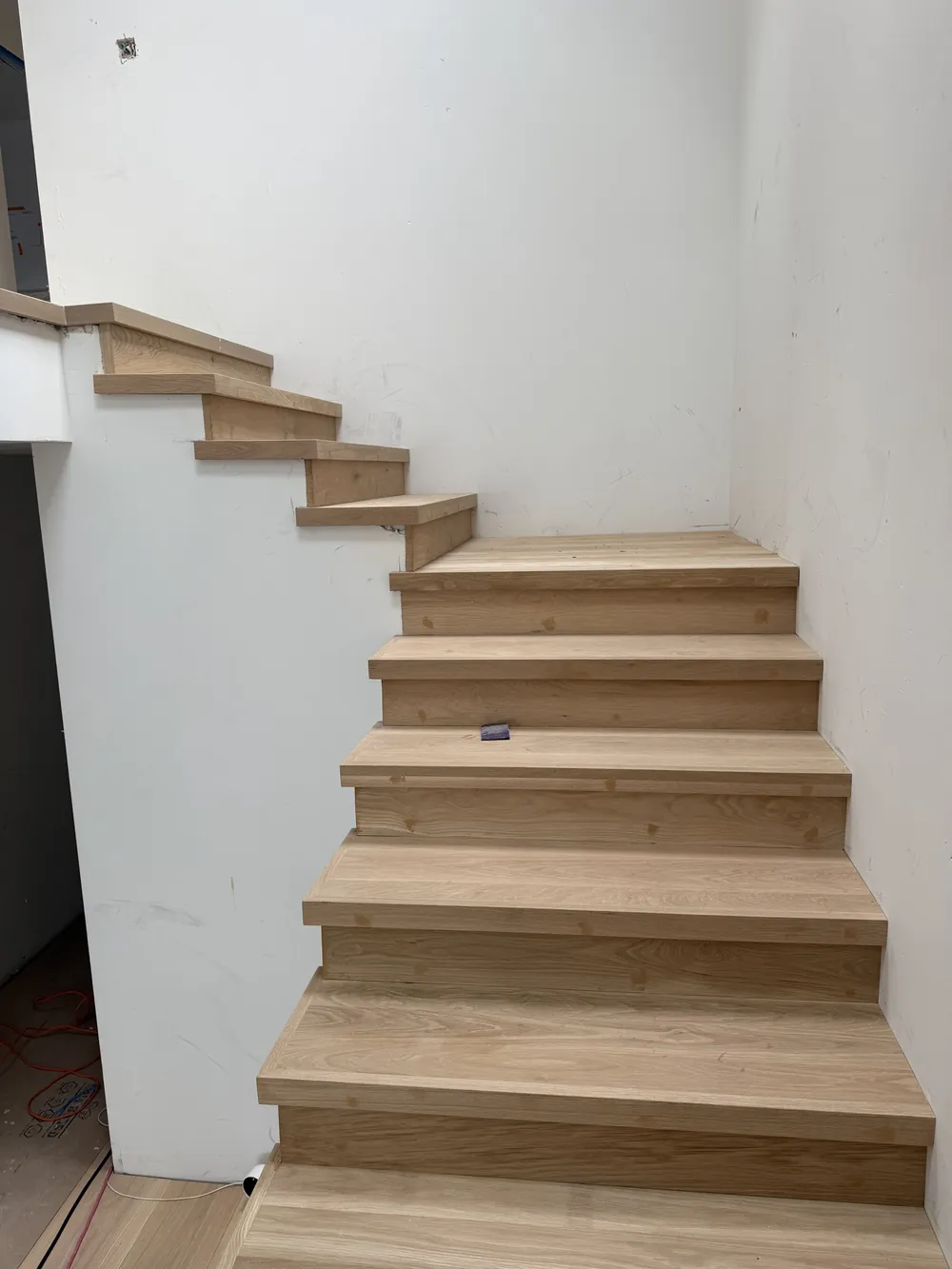
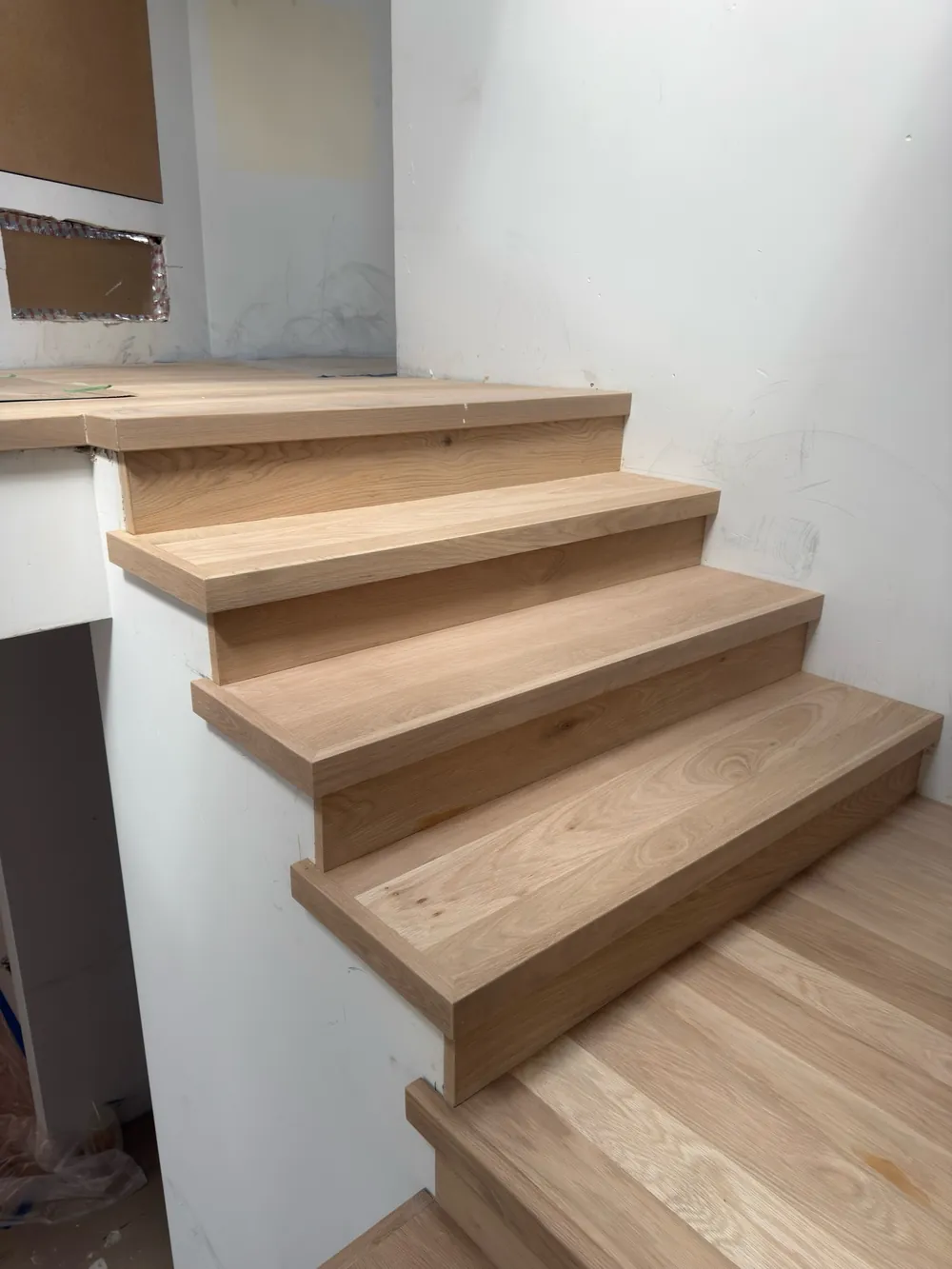
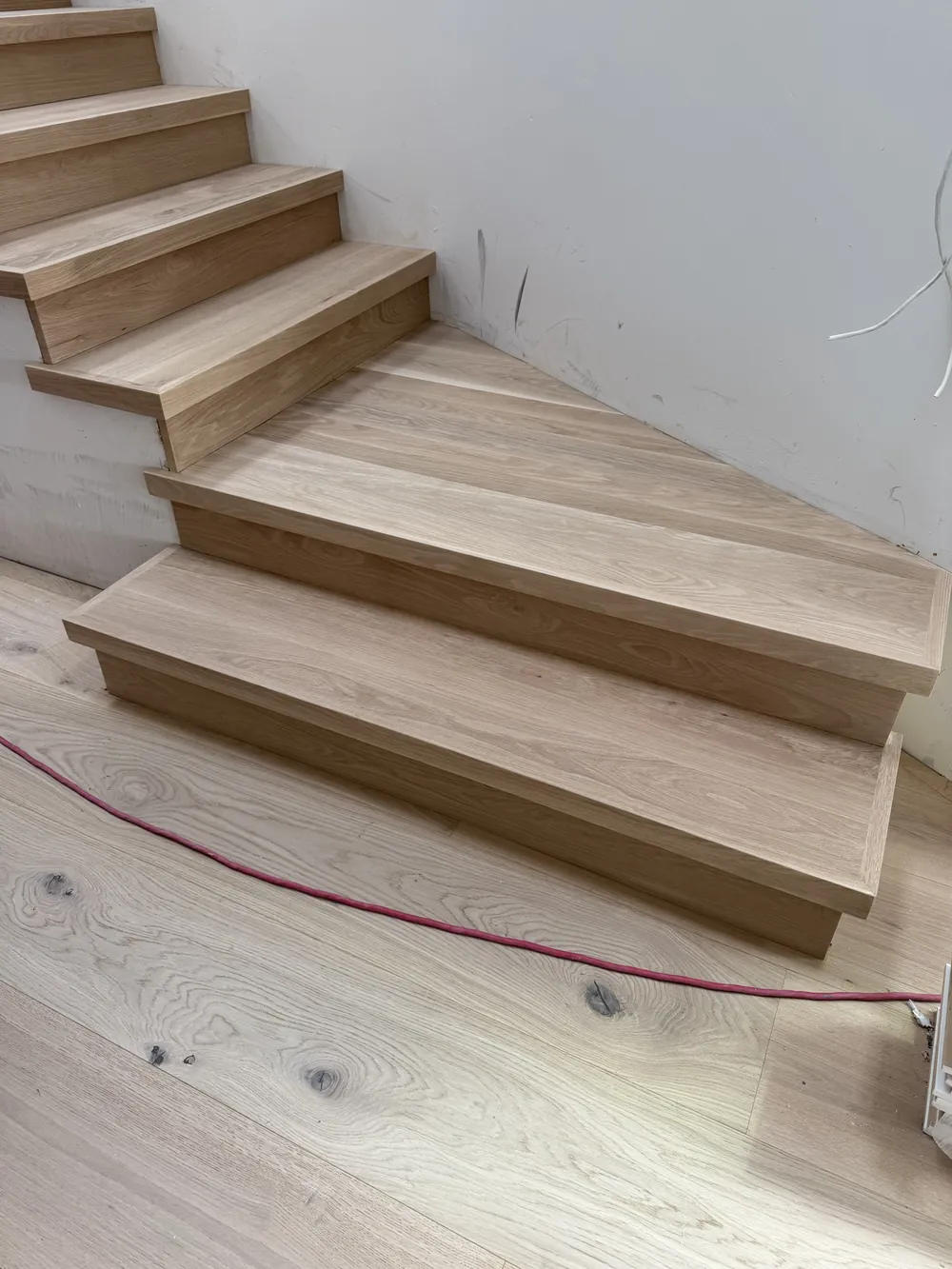
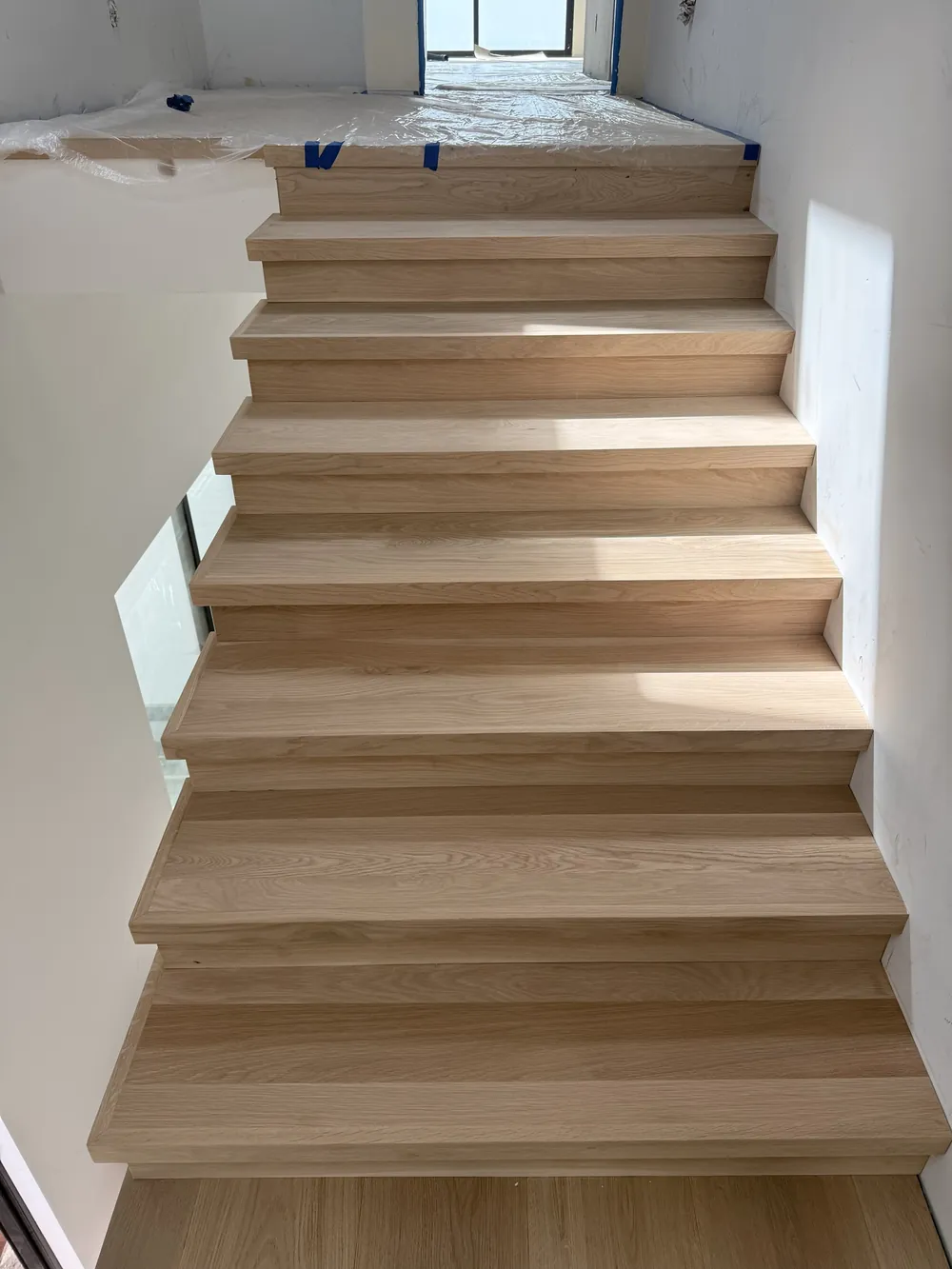
The photos were taken while the work was still underway, so they show bare wood, tools and floor protection rather than the finished staircase. They are still useful for seeing how the parts come together.
A few things are easy to spot. White oak has a strong, straight grain with occasional cathedral patterns, and you can see it running the length of each tread and riser. The front edge of each tread projects past the riser below it. And the staircase is not a simple straight run: it changes direction partway up and again at the bottom, where the lower steps turn to meet the floor. Each change of direction means differently shaped treads that have to be fitted to their own step.
Why start with unfinished white oak?
Starting with bare wood keeps the color decision open. Unfinished treads can be stained after they are fitted, so the color can be chosen against the actual floor in the actual room rather than picked from a catalog.
It also lets the finish be chosen for the stairs. Stairs take concentrated wear at the front edge of every step, and the sheen and number of coats can be planned with that in mind.
Prefinished treads have their place; they can go in faster because there is no stain or finish to apply and cure on site. The trade-off is that you are limited to the colors the manufacturer makes.
Coordinating stair treads with hardwood flooring
"Stained to match" is the goal, but it is worth knowing what affects how close the stairs and floors look.
- Grain and wood selection. Two boards of the same species can look different. Treads are made from wider pieces than most floor planks, so the grain pattern may read differently.
- Lighting. Stairs are often lit from a window or a skylight above, while the floor is lit from the side. The same color can look lighter or darker in each spot.
- Finish and sheen. A matte finish and a satin finish over the same stain will not look identical.
- Age of the floor. If the flooring has been down for years, it has changed color with light exposure, and new wood will start out different.
Because of these variables, we recommend reviewing stain samples on the tread wood, in the room, before the stairs are finished. Expect a close coordination rather than an exact copy.
Planning the treads, risers and landings together
On this project, the treads and risers are both white oak, which gives the staircase an all-wood look in the photos. Whether the risers are painted or wood is one of the bigger design choices for any staircase:
- Treads are the horizontal surfaces you step on, and they set the color and grain of the staircase.
- Risers are the vertical boards between steps. Wood risers create a continuous wood look; painted risers, often white, add contrast and are easy to touch up.
- Landings are the flat areas where a staircase turns or ends. They are usually laid in the same flooring as the level they connect to, with a nosing at the edge.
- Exposed ends on an open side of a staircase need a finished edge, often called a return, so the tread looks solid from the side.
Deciding these together, before anything is ordered, is what makes a staircase look like part of the house instead of an add-on.
What affects a custom staircase estimate?
Every staircase is different, so we measure first and price it at your home. The main factors are:
- the number of steps, and how many are shaped steps at turns;
- the width of the treads;
- open sides and exposed tread ends;
- the number and size of landings;
- what is there now, such as carpet or old treads to remove, and any preparation the structure needs;
- material selection, including species and riser type;
- the finishing scope: stain, number of coats and curing time.
For pricing, call (323) 498-3735 or book a free in-home estimate.
Planning hardwood stairs in the Los Angeles area
We are a mobile flooring business: we come to you with samples and measure on site. Talking about the stairs and the floors at the same visit makes it easier to plan transitions at the top and bottom of the staircase and to choose a stain once for both.
If you are only redoing the stairs, that works too. Learn more about our custom hardwood stair tread installation or our hardwood flooring installation service.
More photos from this project
All taken during installation.

Stair tread questions
Can custom white oak stair treads coordinate with existing hardwood flooring?+
Often, yes. Starting with unfinished white oak lets the stain be chosen to coordinate with the floor that is already there. Existing floors have aged and their grain varies, so the goal is a close coordination rather than an identical match; reviewing stain samples on the tread wood before finishing is the best way to judge it.
What is the difference between unfinished and prefinished stair treads?+
Unfinished treads arrive as bare wood and are stained and finished after they are fitted, which gives the most control over color. Prefinished treads come with a factory finish, so they can be quicker to install but are limited to the colors the maker offers.
Can I request a staircase-only estimate?+
Yes. You can ask us to quote the stairs on their own. If you are also considering new floors, we can price both at the same visit so you can compare.
What information should I prepare for a stair installation estimate?+
A rough step count, whether any side of the staircase is open, how many landings there are, what is on the stairs now (carpet, wood or bare treads) and the floor you want the stairs to coordinate with. Photos of the whole staircase from the bottom and top, and of a step's front edge, help us prepare.